


Before choosing or changing your optometrist in Drummoyne, check the practice’s clinical services, request relevant eye test records, confirm examination requirements and fees, and discuss arrangements for ongoing care. Your new optometrist can then determine which assessments are appropriate for your individual needs.
Regular visits to an eye opener optometrist in Drummoyne may help detect early signs of eye conditions, monitor prescription changes and support long-term eye health. However, relocating to a new suburb, changing work commitments, evolving vision needs or a preference for different appointment arrangements may prompt you to look for a new optometrist.
However, when making this transition, maintaining continuity of eye care should remain a priority. Additionally, changing optometrists can become unnecessarily complicated when patients forget previous records, overlook additional fees, or assume their existing prescriptions are all they need. Whether you are arranging an appointment for yourself or your family, this guide explains seven practical checks to help you make an informed decision and maintain continuity of your eye care.
Can You Change Optometrists?
Yes, you can choose a different optometrist without having to start your entire eye care journey again. However, changing practices does not automatically transfer your prescriptions, clinical records or existing follow-up arrangements. The availability of suitable clinical services should remain an important consideration.
If you have an ongoing eye condition or a scheduled review, discuss the transition before cancelling your existing appointment. This helps prevent unnecessary interruptions to your care.
1. Check Whether the Practice Meets Your Eye Care Needs
Choose an optometrist whose clinical services match your current vision requirements and ongoing eye health needs, rather than selecting a practice based solely on location, eyewear prices or online ratings.
A patient who needs updated reading glasses may require a different assessment from someone with diabetes or a history of eye disease. Similarly, contact lens wearers and children may benefit from appointments tailored to their individual circumstances.
Before choosing a Drummoyne optometrist, ask whether the practice provides:
- Comprehensive adult eye examinations.
- Children’s vision assessments.
- Contact lens examinations and fittings.
- Retinal photography and visual field assessments where indicated.
- Ongoing eye health monitoring and specialist referrals.
You can also check the practitioner’s registration through AHPRA’s public register.
If a practice cannot provide a particular assessment, ask whether it can arrange an appropriate referral or coordinate with your existing healthcare provider.
Also, review the available optometry services before booking so you can discuss your specific requirements with the reception team.
2. Ask How to Transfer Your Previous Eye Test Records

Request relevant clinical records from your previous optometrist before changing practices, particularly if you have a history of changing prescriptions, eye disease or ongoing eye health monitoring.
Your most recent glasses prescription is useful, but it may not contain all the information your new optometrist needs. Previous examination findings can provide valuable context when assessing changes over time.
The Australian Government’s Office of the Australian Information Commissioner explains how to request access to your health information from the healthcare provider holding your records.
Ask your previous practice about its process for releasing records, any applicable charges and how information can be transferred securely with appropriate consent.
Which Prescriptions, Scans and Reports Should You Request?
Depending on your eye care history, useful records may include:
- Your latest spectacle and contact lens prescriptions.
- Previous retinal photographs or scan reports.
- Visual field assessment results.
- Relevant eye pressure measurements.
- Specialist referral letters and examination reports.
- Recommended follow-up appointments.
If your previous records are unavailable, explain the situation to your new optometrist. Do not postpone a necessary assessment simply because you are still waiting for documents.
3. Find Out Whether You Need a New Eye Exam
Changing optometrists does not automatically mean you need to repeat every previous test. Your new practitioner will consider your examination history, current symptoms and eye health requirements before determining which assessments are appropriate.
For instance, someone who recently completed an eye test and has no new symptoms may have different needs from a patient experiencing unexplained vision changes.
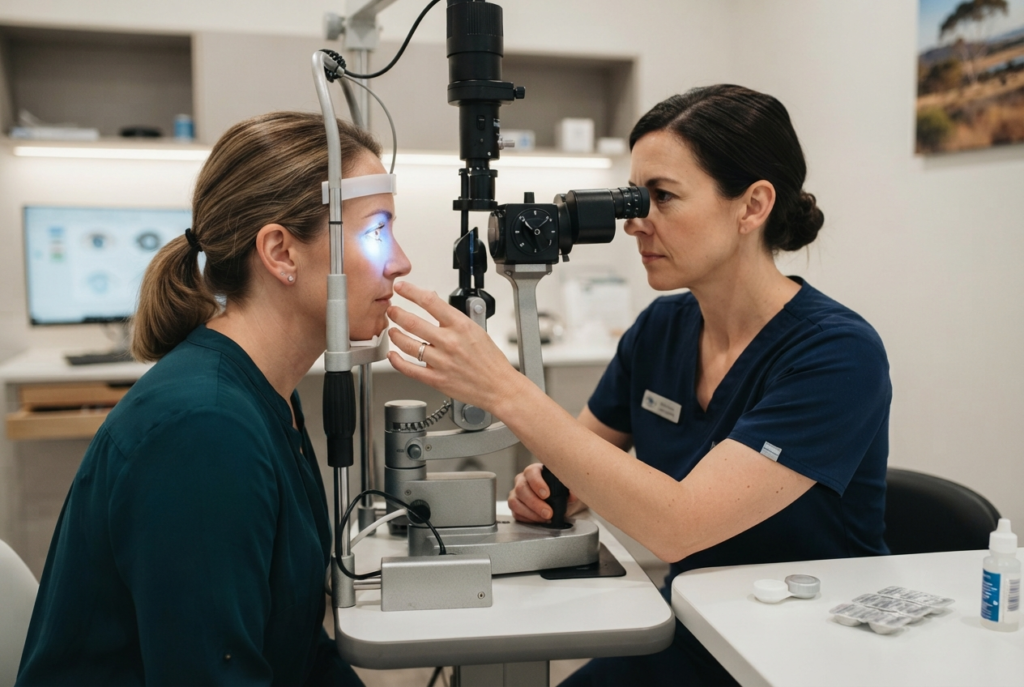
During a comprehensive eye examination in Drummoyne, an optometrist may assess your prescription, visual function and relevant aspects of eye health.
Additional assessments may be recommended when previous findings require investigation or when existing information is insufficient.
Before attending, ask:
- Is my current prescription useful for this appointment?
- Should I arrange a comprehensive examination or a specific review?
- Could previous scans help with today’s assessment?
- Are additional tests likely to involve separate fees?
If you notice sudden vision loss, severe eye pain or a sudden significant change in your eyesight, seek urgent medical attention rather than waiting for a routine appointment.
4. Check Appointment Options for Your Children

When changing your child’s optometrist, choose a practice that provides age-appropriate examinations and can consider previous prescriptions, visual development and any recommended follow-up care.
Children do not always recognise or communicate visual difficulties clearly. Consequently, information from parents, teachers and previous examinations can help an optometrist understand what requires closer assessment.
When looking for a kids’ optometrist, discuss how the practice adapts examinations for children who feel anxious, have difficulty concentrating or need additional support.
A children’s eye test in Drummoyne can help assess visual needs in the context of everyday activities, including schoolwork, reading and sport.
Preparing for a Children’s Vision Test
Bring your child’s existing glasses, previous assessment reports and a short description of any concerns you have noticed.
For example, record whether difficulties occur when reading, viewing classroom displays or completing activities at home.
If your child has an existing treatment plan or specialist appointment, tell the new optometrist before making changes to those arrangements.
5. Discuss Your Existing Contact Lens Prescription
If you already wear contact lenses, bring your current lens prescription and packaging to your new optometrist. Another fitting or review may be appropriate if your prescription, comfort, lens fit or eye health needs have changed.
A spectacle prescription does not necessarily contain the information required to select suitable contact lenses. In addition to lens power, factors such as lens design, dimensions and how the lens interacts with your eye may affect suitability.
Before discussing contact lenses in Drummoyne, prepare the following information:
- Your current contact lens brand and prescription.
- Your usual wearing schedule and replacement frequency.
- Any discomfort, dryness or changes in vision.
- Your existing cleaning and lens care routine.
Ask whether the practice can assess your current lenses, discuss appropriate alternatives and organise follow-up care.
If your preferred lenses are unavailable or no longer suitable, avoid choosing a replacement based solely on matching prescription strength. Discuss the available options with your optometrist first.
6. Confirm Medicare Coverage and Potential Additional Fees
Before booking with a new optometrist, confirm Medicare eligibility, consultation charges and possible additional costs for diagnostic assessments or contact lens services. Changing practices does not automatically reset your Medicare entitlement.
Eligible routine eye examinations may be covered by Medicare, although billing arrangements and the need for additional assessments can vary.
Private health insurance may also contribute towards eligible optical products, depending on your policy and remaining benefits.
For a clearer understanding of an eye check in Sydney, consider asking about these separate cost categories.
| Service or product | What to confirm |
| Standard consultation | Medicare eligibility and any out-of-pocket fee |
| Additional imaging | Whether it is recommended and separately charged |
| Contact lens fitting | Initial assessment and follow-up fees |
| Prescription eyewear | Frame, lens and optional upgrade costs |
| Record requests | Any applicable administration or copying charges |
If the full cost cannot be established before examination, ask how additional charges will be communicated and approved before proceeding.
7. Understand Follow-Up Care and Specialist Referrals
Before changing optometrists, establish who will manage your ongoing eye health assessments, when your next review is due and whether existing specialist referrals need to be communicated to the new practice.
Continuity is especially important for people undergoing monitoring for glaucoma, diabetes-related eye changes or other conditions requiring periodic assessment.
For example, a patient may have previous retinal photographs and an upcoming ophthalmologist appointment. The new optometrist should know about those arrangements before recommending a future review schedule.
Ask the practice how it manages:
- Follow-up examinations and appointment reminders.
- Changes identified during eye health assessments.
- Communication with other treating healthcare practitioners where appropriate.
- Referrals for further investigation.
If you already have an appointment with an ophthalmologist, do not assume changing optometrists replaces that appointment.
Instead, confirm which practitioner is responsible for each part of your ongoing care and follow the relevant clinical advice.
First Appointment Checklist: What Should You Bring?
Preparing for your first eye test makes it easier to communicate your concerns and provide relevant clinical information.
Use this checklist to identify what you may need for your particular appointment.
| Patient type | Information to prepare |
| Adult wearing glasses | Current glasses, prescription and vision concerns |
| Parent booking for a child | Existing glasses, reports and observations |
| Contact lens wearer | Lens prescription, packaging and wearing routine |
| Patient receiving eye health monitoring | Previous test results, medications and referral letters |
| New patient without records | Relevant medical history and current symptoms |
Before leaving home, also check that you have:
- Your Medicare card and private health insurance details, if applicable.
- A list of relevant medications and medical conditions.
- The correct appointment time and practice address.
- Questions about examinations, costs or follow-up arrangements.
If you cannot locate every document, contact the practice to establish which information is essential before attending.
Frequently Asked Questions
Take the Next Step Towards Your Eye Care
Choosing a new optometrist is about more than finding a nearby appointment. By organising previous records, confirming suitable assessments and understanding potential fees, you can make a more informed decision about your ongoing care. If you are also considering your options, feel free to consult with a professional optometrist to discuss your requirements or request an appointment when you are ready.