

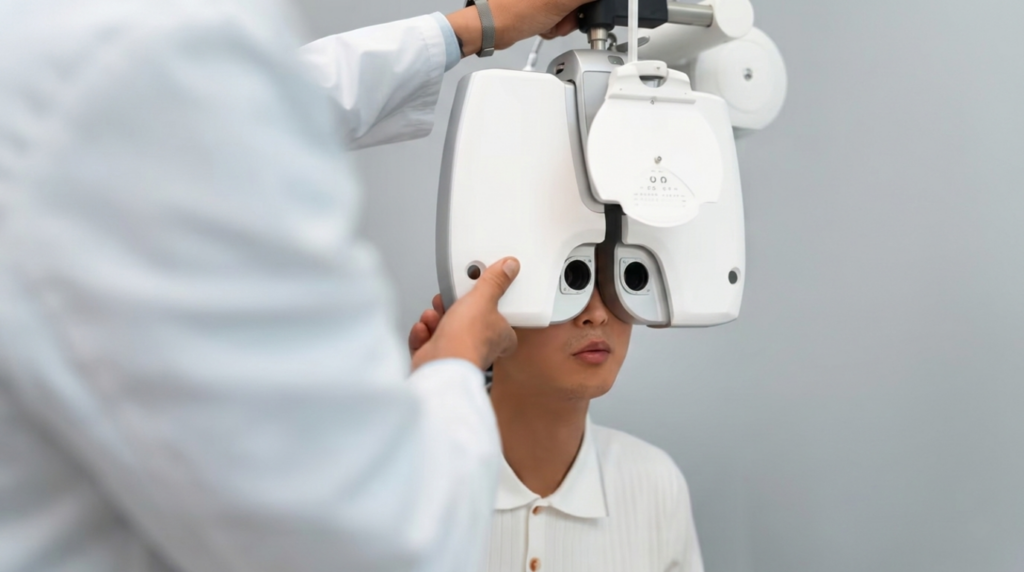
Getting an eye check in Sydney is something most people put off until a problem becomes impossible to ignore. Yet a comprehensive eye examination does far more than check whether you need glasses. It reveals hidden health conditions, catches early signs of glaucoma, and uncovers the real reason behind those persistent headaches or blurry screen vision. At Drummoyne Optometry in the Inner West, patients consistently discover that what seemed like a minor inconvenience was actually a correctable vision issue. Moreover, most eligible Medicare cardholders pay nothing at all. This guide walks through everything you need to know – from the cost, to the process, to the signs that it is time to book.
Why Regular Eye Checks Matter More Than You Think
Vision is arguably the sense people take most for granted. Gradual changes happen slowly. Therefore, the brain compensates quietly for months or even years. By the time you notice blurry vision, eye strain, or worsening night sight, the underlying condition may already be significantly developed.
A comprehensive eye check in Sydney does considerably more than update a glasses prescription. It examines the health of your retina, optic nerve, blood vessels, and the pressure inside your eyes. Consequently, conditions like glaucoma, macular degeneration, and even early signs of diabetic retinopathy can be detected during a routine examination – often before you notice any vision changes at all.
Verified Fact – Optometry Australia
Approximately 90% of vision loss in Australia is preventable or treatable when detected early. Regular eye examinations are the primary mechanism for early detection. Source: Optometry Australia.
Over 575,000 Australians live with vision impairment. More than 80% of those cases result from conditions that could have been prevented or treated with earlier intervention. Source: Australian Institute of Health and Welfare (AIHW).
Furthermore, eye examinations detect systemic health conditions. Retinal blood vessels reflect the state of your cardiovascular system. An experienced optometrist in Drummoyne can sometimes spot early indicators of hypertension, diabetes, or cholesterol issues – conditions that you might otherwise not discover until a more serious event occurs.
Signs Your Eyes Are Trying to Tell You Something
Many Sydney patients book their first comprehensive eye check only after symptoms become impossible to ignore. However, waiting for obvious signs means missing the window for early intervention. Recognising subtler cues is essential.
Symptoms That Warrant an Eye Check Without Delay
- Frequent headaches – especially around the forehead, temples, or behind the eyes after reading or screen use
- Blurry vision at any distance, particularly when worsening gradually
- Eye strain or fatigue after short periods of reading or computer work
- Difficulty driving at night due to glare, halos, or reduced clarity
- Squinting to see clearly at distance or when reading
- Floaters or flashes of light – which can indicate retinal issues requiring urgent review
- Dry, irritated, or red eyes that persist despite standard remedies
- Double vision or difficulty focusing on moving objects
- Sensitivity to light that feels new or unusually intense
Important: Sudden loss of vision, sudden onset of floaters, or flashes of light are medical emergencies. Contact an optometrist or emergency department immediately rather than waiting for a scheduled appointment.
Headaches, in particular, are one of the most commonly reported reasons for seeking an eye check in Sydney. Uncorrected refractive errors – like long-sightedness or astigmatism – force your eye muscles to work harder than necessary. Over time, that constant effort triggers tension headaches. Addressing the underlying vision issue often resolves headaches that patients have endured for years.
“Vision problems are among the most underdiagnosed contributors to chronic headaches in Australia. A simple eye examination can identify whether your prescription needs updating.”– Optometry Australia, Eye Health Evidence
What Happens During a Comprehensive Eye Examination
One of the most common concerns patients share before their first visit is simply not knowing what to expect. Understanding the process removes anxiety and helps you prepare effectively.
At Drummoyne Optometry, a comprehensive eye examination typically runs for 30 to 45 minutes. It is thorough, entirely painless, and covers far more than a standard vision screening you might receive at a school or GP clinic.
Step-by-Step: Your Eye Appointment Explained
| Stage | What Happens | Why It Matters |
| 1. Health History | Discussion of current symptoms, medications, family history, and lifestyle | Identifies risk factors for eye disease and systemic conditions |
| 2. Visual Acuity Test | Reading letters on a standardised chart at set distances | Measures sharpness of vision at near and far distances |
| 3. Refraction Assessment | Using a phoropter or trial lenses to determine precise prescription | Establishes correct lens prescription for glasses or contact lenses |
| 4. Eye Pressure Test (Tonometry) | Gentle measurement of intraocular pressure | Screens for glaucoma – a leading cause of preventable blindness |
| 5. Slit Lamp Examination | Magnified inspection of the front structures of the eye | Detects cataracts, corneal conditions, and anterior eye disease |
| 6. Retinal Examination | Assessment of the retina, optic disc, and blood vessels | Identifies macular degeneration, diabetic changes, and optic nerve issues |
| 7. Binocular Vision Assessment | Evaluation of how both eyes work together | Reveals eye muscle imbalances causing headaches or double vision |
| 8. Results and Discussion | Explanation of findings, prescription, and recommended management | Ensures you leave with a clear understanding of your eye health |
Additionally, depending on your individual needs, the optometrist may perform peripheral vision (visual field) testing, colour vision assessment, or detailed retinal imaging. These additional assessments are clinically driven, not routine upsells.
After your examination, you will receive a full explanation of your results. If a prescription is needed, you can explore the extensive range of frames and lenses available at Drummoyne Optometry. If a referral to an ophthalmologist is warranted, the practice will coordinate that directly.
Medicare, Bulk Billing, and the Real Cost of an Eye Check in Sydney
Cost is the most frequently cited reason people delay an eye check in Sydney. Fortunately, the reality is far more affordable than most people assume – and for many residents, it is entirely free.
How Medicare Covers Eye Tests in Australia
Under the Medicare Benefits Schedule (MBS), eligible Australians are entitled to Medicare-funded optometry consultations. A registered optometrist can bill Medicare directly for a comprehensive eye examination. If the practice bulk bills, you pay nothing out of pocket.
What Affects the Out-of-Pocket Cost
While the eye examination itself may be bulk billed, additional services can carry their own fees. Retinal photography, OCT scanning, or contact lens fitting assessments may attract a gap fee. Similarly, the cost of glasses, frames, and lenses is separate from the consultation. Private health insurance with optical extras often covers a portion of these.
Importantly, you do not need a referral from a GP to see an optometrist in Australia. Simply call Drummoyne Optometry on 02 9181 3157 or email vision@drummoyneoptometry.com.au to arrange an appointment directly.
How Often Should You Have Your Eyes Checked in Sydney
The answer to this question is not the same for every person. Frequency depends on your age, medical history, current prescription, family history, and specific risk factors.
| Group | Recommended Frequency | Reason |
| Children (under 18) | Before school, then every 1-2 years | Vision develops rapidly; undetected issues affect learning |
| Adults (18-40), no issues | Every 2 years | Prescription stability; general health screening |
| Adults (40-64) | Every 1-2 years | Presbyopia onset; increased disease risk |
| Adults 65 and over | Annually | Higher risk of glaucoma, macular degeneration, cataracts |
| Diabetes patients | Annually (minimum) | Diabetic retinopathy risk; Medicare-funded assessment available |
| Family history of eye disease | As advised by optometrist | Elevated genetic risk for glaucoma, macular degeneration |
| Contact lens wearers | Annually | Prescription verification and corneal health monitoring |
Even if you have no symptoms at all, a biennial check remains essential. Many of the most serious eye conditions – particularly glaucoma – present with no pain and no visual symptoms until significant damage has occurred. Early detection through a routine exam is the only reliable protection.
Children’s Vision and Eye Checks in the Inner West
School-age children in Sydney rarely report vision problems. They simply do not have a reference point for clear, comfortable vision. As a result, undetected vision problems quietly undermine reading, sports performance, and classroom confidence.
The most critical window is before school entry – ideally at age four or five. Conditions like amblyopia (commonly called “lazy eye”) and strabismus (eye turn) respond dramatically better to treatment when caught early. Treatment becomes significantly more difficult after age seven or eight, as the visual system matures.
Verified Fact – Optometry Australia
Around 1 in 5 school-age children in Australia has an undetected vision problem. Many of these children are misidentified as having learning difficulties or attention issues when the actual cause is a correctable vision condition. Source: Optometry Australia.
Warning Signs in Children That Parents Often Miss
- Sitting too close to the television or holding books very close
- Frequent eye rubbing, especially when concentrating
- Tilting or turning the head to see clearly
- Complaining of headaches after school
- Covering one eye or closing it to see better
- Avoiding reading or near tasks
- A noticeable eye turn (one eye drifting inward or outward)
At Drummoyne Optometry, children’s vision assessments are conducted using child-friendly techniques that do not require the child to read or respond verbally. These assessments are appropriate even for pre-school children and provide parents with clear, actionable guidance.
Furthermore, myopia (short-sightedness) is now recognised as a growing public health concern. Australian research confirms that the prevalence of myopia in children is increasing, with screen time and reduced outdoor activity identified as contributing factors. Early intervention with specialised contact lenses or optical strategies can help slow myopia progression in young patients.
Digital Screens, Eye Strain, and the Modern Eye Health Challenge
Inner West Sydney residents – many of whom work in creative, professional, or technology sectors – spend a substantial portion of their day in front of screens. Consequently, digital eye strain has become one of the most prevalent presenting complaints at optometry practices across Sydney.
Digital eye strain (also described clinically as Computer Vision Syndrome) produces a recognisable cluster of symptoms: dry eyes, tired eyes, blurred near or distance vision, headaches, and difficulty focusing after extended screen use. These symptoms are not permanent or damaging in themselves. However, they significantly affect productivity and comfort.
Verified Fact – American Academy of Ophthalmology / Optometry Australia
Current clinical evidence indicates that digital screens do not cause permanent eye damage. However, reduced blink rate during screen use (from approximately 15 times per minute to 5-7 times per minute) is a clinically documented cause of dry eye symptoms. Source: American Academy of Ophthalmology and Optometry Australia.
An eye check helps identify whether your current prescription is optimised for screen work. Specifically, many people with uncorrected or undercorrected prescriptions experience far more strain at screen distances. Additionally, digital eyewear – lenses designed specifically for screen use – can significantly reduce eye strain for heavy screen users even without a traditional prescription.
The 20-20-20 Rule: Evidence-Based Screen Relief
Optometry Australia endorses the 20-20-20 approach: every 20 minutes of screen use, look at something 20 feet (approximately 6 metres) away for at least 20 seconds. This gives your focusing muscles a brief recovery period and encourages more frequent blinking.
If symptoms persist despite these strategies, a comprehensive eye check is strongly recommended. The solution is often as simple as an updated prescription or a targeted lens coating.
Contact Lenses and Prescription Eyewear After Your Eye Check
Many people who come in for an eye check discover that contact lenses are a practical option they had never fully explored. Modern contact lenses have advanced dramatically. Silicone hydrogel materials allow significantly more oxygen through to the cornea. Daily disposables eliminate the cleaning routine entirely.
A contact lens fitting is a separate clinical assessment from your eye examination. It involves measuring your corneal curvature, evaluating your tear film quality, and assessing the fit of trial lenses on your eyes. This ensures both comfort and long-term corneal health.
Beyond standard contact lenses, Drummoyne Optometry also offers specialty options including orthokeratology (overnight lenses that temporarily reshape the cornea), multifocal contacts for presbyopia patients, and myopia control lenses for young patients.
For those who prefer glasses, the practice carries a curated range of frames alongside prescription sunglasses – particularly relevant for Sydney’s climate and the outdoor-focused lifestyle of Inner West residents. UV protection is a genuine health priority, not simply an aesthetic consideration.
If you are involved in sport or physically active recreational activities, sports vision assessment can sharpen reaction times, depth perception, and visual tracking – qualities that go beyond standard acuity. Many athletes are surprised by the gains a targeted sports vision programme can deliver.
Why Choose Drummoyne Optometry for Your Eye Check in the Inner West
Drummoyne Optometry sits at the heart of the Inner West community. Located inside Sutton Place Shopping Centre on Lyons Road, the practice is accessible from Drummoyne, Rozelle, Balmain, Leichhardt, Five Dock, and surrounding suburbs. Parking is convenient, and the centre is serviced by multiple bus routes.
Unlike large chain optometry providers, Drummoyne Optometry operates as an independent, community-focused practice. Appointments are unhurried, examinations are thorough, and every clinical decision is driven by what is right for the individual patient – not by retail targets.
What to Bring to Your Appointment
- Your Medicare card (and concession card if applicable)
- Current glasses or contact lenses
- A list of any current medications
- Details of any previous eye conditions or surgeries
- Notes on any symptoms you have been experiencing
- Private health insurance card if applicable
No referral is required. Simply contact the practice to arrange your appointment directly.
Frequently Asked Questions About Eye Checks in Sydney
These are the questions our Sydney patients ask most often. Each answer is concise and evidence-based.
The Clearest Decision You Can Make for Your Eye Health
Booking an eye check in Sydney costs far less than most people assume. Furthermore, for eligible Medicare cardholders, it costs nothing at all. Yet the value of a comprehensive eye examination extends well beyond the cost comparison. It is, quite simply, one of the most effective preventive health decisions you can make.
From catching the early warning signs of glaucoma, to finally identifying the source of those persistent headaches, to making sure your child’s vision is not silently holding back their learning – a thorough eye examination delivers answers that no other health appointment provides.
Drummoyne Optometry serves the Inner West community from its convenient Lyons Road location. The team offers thorough, unhurried consultations for patients of all ages. Whether you are booking your first-ever check, bringing in your child before school starts, or simply updating an existing prescription – the practice is ready to help.
Do not wait for a symptom to force your hand. Book your comprehensive eye check in Sydney’s Inner West today and take a confident step toward protecting your vision for the years ahead.