

If your child wears glasses and plays football, netball, tennis or another sport, you may be wondering whether contact lenses could make playing easier. For some children and teenagers, contact lenses can be a practical option for sport. However, the right choice depends on their eye health, prescription, ability to handle lenses safely, and the demands of their chosen activity.
There is no single minimum age that suits every child. An optometrist can assess whether contact lenses are appropriate and help your family understand the responsibilities involved. This guide explains what parents should consider before exploring contact lenses for sport, including readiness, hygiene, lens choices, and when protective sports eyewear may be the better option.
Can children wear contact lenses for sport?
Yes. Some children and teenagers can wear contact lenses for sport if an optometrist considers them suitable and they can follow the required wearing and care instructions. Contact lenses may reduce problems associated with glasses slipping, fogging, or obstructing parts of the field of view during physical activity.
However, contact lenses do not protect the eyes from impact. A child playing a high-impact or contact sport may still need appropriately designed protective eyewear. The choice should take account of the child’s prescription, eye health, maturity and the specific sport.
Parents considering contact lenses for children playing sport should discuss the available options with an optometrist rather than choosing lenses based only on convenience or another child’s experience.
What age can a child start wearing contact lenses?
There is no universal starting age for contact lenses. Some children can learn to handle them responsibly while relatively young, while others may need more time. Maturity, motivation, hygiene habits, and the ability to follow instructions are more useful considerations than age alone.
Signs your child may be ready
- They understand why clean hands are essential before touching their lenses.
- They are willing to learn how to insert and remove lenses correctly.
- They can follow the prescribed wearing schedule and replacement instructions.
- They will tell an adult if their eyes become uncomfortable, red, or painful.
- They understand that lenses must never be shared with friends.
- They are willing to keep backup glasses available.
Parental supervision remains important, particularly while a child is learning. Your optometrist can assess whether your child is ready and explain the responsibilities that come with wearing contact lenses.
Are contact lenses better than glasses for sport?
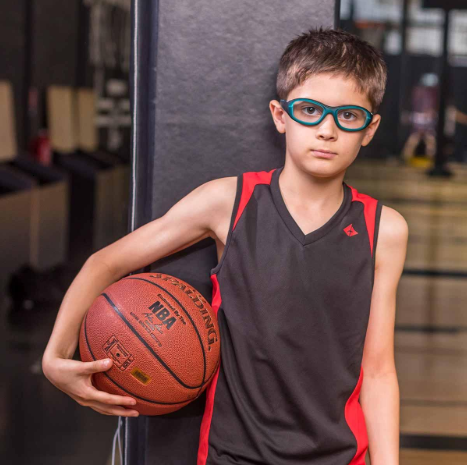
Contact lenses can offer practical advantages during many sports, but they are not automatically the best choice for every child or activity. The decision should consider vision correction, comfort, eye safety, and the equipment required for the sport.
Consideration | Contact lenses | Sports glasses or goggles |
| Peripheral vision | No spectacle frame around the visual field | Depends on the design and fit |
| Movement | Can be convenient during running and ball sports | Must fit securely and suit the activity |
| Impact protection | Do not protect the eye from impact | Purpose-designed protective eyewear may provide protection |
| Daily care | Requires correct handling and hygiene | Requires cleaning and checking of fit and condition |
| Water sports | Water exposure creates avoidable risks | Prescription swimming goggles may be a more suitable option |
For children who play contact sports, do not assume contact lenses alone make the activity safe. Ask your optometrist about protective eyewear appropriate to the sport. Ordinary prescription glasses are not a substitute for suitable impact protection.
Which are the best contact lenses for sport?
The best contact lenses for sport are the ones that fit the child’s eyes, correct their vision appropriately, and suit their wearing routine. An optometrist will consider the prescription, eye health, activities, comfort, and the child’s ability to care for the lenses.
Daily disposable contact lenses
Daily disposable contact lenses are used once and discarded at the end of the day according to their instructions. They can be convenient for children who only need contact lenses for training, competitions, or selected activities. They also avoid the need to clean and store reusable lenses overnight.
Daily disposables still require clean hands, correct insertion and removal, and adherence to wearing instructions. They should never be reused beyond their intended single-use schedule.
Reusable soft contact lenses
Soft contact lenses for sport may be suitable for some young athletes. Reusable lenses require the prescribed cleaning, disinfection and storage routine, as well as replacement at the recommended interval. A child who cannot reliably follow these steps may need more supervision or a different option.
Neither daily disposable nor reusable lenses are right for every child. Your optometrist can explain the benefits and limitations of each option for your child’s eyes and sporting routine.
Contact lens hygiene and eye safety for young athletes
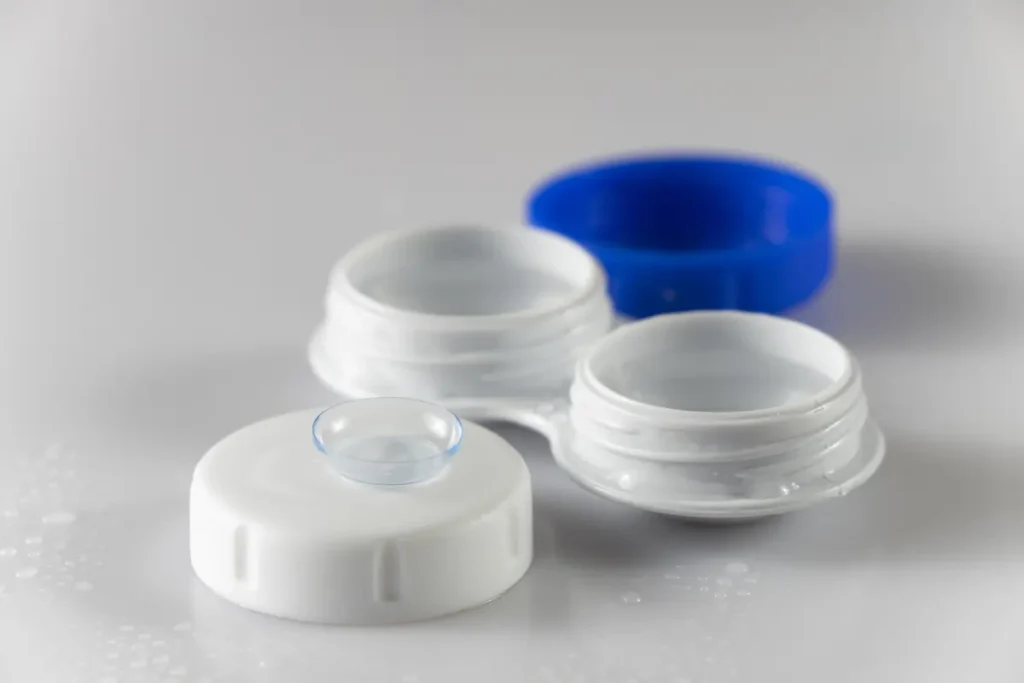
Good hygiene is essential whenever a child wears contact lenses. Poor handling, sleeping in lenses when not prescribed, using water with lenses, or ignoring symptoms can increase the risk of complications, including serious eye infections.
- Wash hands thoroughly with soap and water, then dry them before handling lenses.
- Follow the optometrist’s instructions for insertion, removal, cleaning and wearing time.
- Never rinse or store lenses in tap water, pool water or saliva.
- Use only the recommended contact lens solution for reusable lenses.
- Do not sleep, shower, or swim in contact lenses unless a qualified eye care professional has specifically advised otherwise; water exposure should generally be avoided.
- Never share contact lenses, even with a sibling or teammate.
- Keep replacement lenses, solution where needed, and clean storage equipment available as instructed.
If a child’s eyes become painful, red, unusually light-sensitive, or their vision changes, they should remove their lenses if they can do so safely and seek prompt professional advice. Significant pain or sudden vision changes require urgent assessment. Do not put a lens back in to see whether the problem improves.
Parents should also follow reliable guidance on contact lens care and hygiene to help reduce the risk of eye irritation and infection, including the advice provided by Healthdirect Australia.
Can children wear contact lenses for football, netball and other sports?
Contact lenses may be suitable for activities such as running, tennis, football and netball, subject to individual assessment. However, the sport’s impact risks and protective equipment requirements must be considered separately from vision correction.
Ball sports and running
For activities involving rapid movement, contact lenses can avoid spectacle frames slipping or fogging. Children still need appropriate sun protection outdoors, and their lenses must be comfortable and correctly fitted.
Football, rugby and other contact sports
Contact lenses do not shield the eyes from a ball, finger or other impact. Ask an optometrist about the protective eyewear recommended for the particular sport. Some activities require purpose-designed sports goggles or other approved protection.
Swimming and water sports
Children should avoid exposing contact lenses to pool, shower, lake, or ocean water because water can carry microorganisms that cause serious eye infections. Prescription sports goggles for swimming can provide vision correction without the need to wear contact lenses in the water.
How can parents help a child manage contact lenses?
Starting contact lenses should be a gradual learning process, not a last-minute change before a competition. Allow time for a child to practise inserting and removing lenses, understand the care routine, and become comfortable with the optometrist’s instructions.
A parent readiness checklist
- Professional assessment: Has an optometrist checked the child’s eyes and confirmed whether contact lenses are appropriate?
- Insertion and removal: Can the child demonstrate the techniques taught during fitting?
- Hygiene: Do they wash and dry their hands before handling lenses?
- Replacement schedule: Do they understand when lenses must be discarded or replaced?
- Supervision: Is an adult available to support the child while they are learning?
- Symptom awareness: Do they know to remove the lenses and tell an adult if their eyes become uncomfortable or their vision changes?
- Backup glasses: Is there a suitable pair available if the child cannot wear their lenses?
- Sport-specific protection: Have the eyewear and safety requirements for the activity been checked?
If several items remain uncertain, discuss them with your optometrist before starting. A child should never feel pressured to wear contact lenses if they are not comfortable handling them.
Where can you arrange contact lens fitting in Drummoyne?
If your child wears glasses and wants to explore contact lenses for sport, a professional fitting is the appropriate starting point. The optometrist can assess the child’s prescription and eye health, discuss suitable lens options, demonstrate handling techniques and arrange follow-up care where required.
Drummoyne Optometry provides contact lens fitting and supply, children’s eye care and sports vision services for families in Drummoyne and the wider inner-west Sydney area. So, if you are looking for quality contact lenses for your child, feel free to explore contact lens fitting and options or learn more about children’s optometry services.
For further sport-specific guidance, you may also visit the sports vision and eyewear page. After all, the aim is to find a vision correction option that suits your child’s eyes, activity, and ability to follow the necessary care routine.
Frequently asked questions
Take the next step
Contact lenses can be a useful option for some young athletes, but the decision should be based on clinical suitability, safe handling and the demands of the sport. If your child wants more freedom from glasses during exercise, speak with an optometrist about the available options.
However, if you are not sure whether your child is ready, you may also book an appointment for a consultation.