

An eye test near Gladesville may have no out-of-pocket consultation fee if you qualify for Medicare and the optometrist bulk bills your examination. However, additional diagnostic tests, contact lens fittings and prescription eyewear may involve separate expenses.
Whether you are experiencing blurred vision, frequent headaches, eye strain or simply need to update your prescription, visiting an optometrist near Gladesville can help identify and address your vision concerns. Regular eye examinations are also important for monitoring long-term eye health and detecting potential problems before noticeable symptoms develop.
However, one of the biggest mistakes patients make is assuming a bulk-billed eye test covers every service they might need. Others delay their appointments because they are concerned about unexpected expenses.
But understanding what your consultation includes can help you make better financial and eye health decisions. This guide explains Medicare coverage, additional examination fees, children’s vision assessments and eyewear costs, along with seven practical checks to make before booking.
How Much Does an Eye Test Cost Near Gladesville?
The cost of an eye test depends on the type of consultation, your Medicare eligibility, the practice’s billing arrangements and whether additional assessments are necessary.
An eligible bulk-billed consultation can cost you $0. However, privately billed appointments may involve an upfront payment, with an applicable Medicare rebate reducing your final expense.
Before comparing prices, establish whether you are comparing equivalent services. A consultation fee alone does not necessarily reflect everything you may require during your visit.
It is also worth distinguishing between examination costs and the price of any glasses or contact lenses recommended afterwards.
7 Checks to Make Before Booking Your Eye Test
1. Check Your Medicare Eligibility
Medicare can cover eligible optometry consultations when the practice chooses to bulk bill. However, eligibility depends on your circumstances, previous examinations and the Medicare item applicable to your visit.
For routine comprehensive examinations, the general Medicare intervals are:
- Patients under 65: Once every three years.
- Patients aged 65 and older: Once every 12 months.
- Patients with particular clinical needs: Additional examinations may qualify under other Medicare criteria.
These intervals relate to Medicare eligibility rather than how frequently everyone should have their eyes examined. If you experience changes in your vision, contact an optometrist rather than waiting for your next routine examination to become eligible.
The Australian Government’s Medicare guidance on eye tests explains examination coverage, referral requirements and the distinction between Medicare and eyewear expenses.
What to do: Have your Medicare details available when booking and ask whether your proposed consultation qualifies for bulk billing or involves an out-of-pocket fee.
2. Confirm What Your Eye Examination Includes
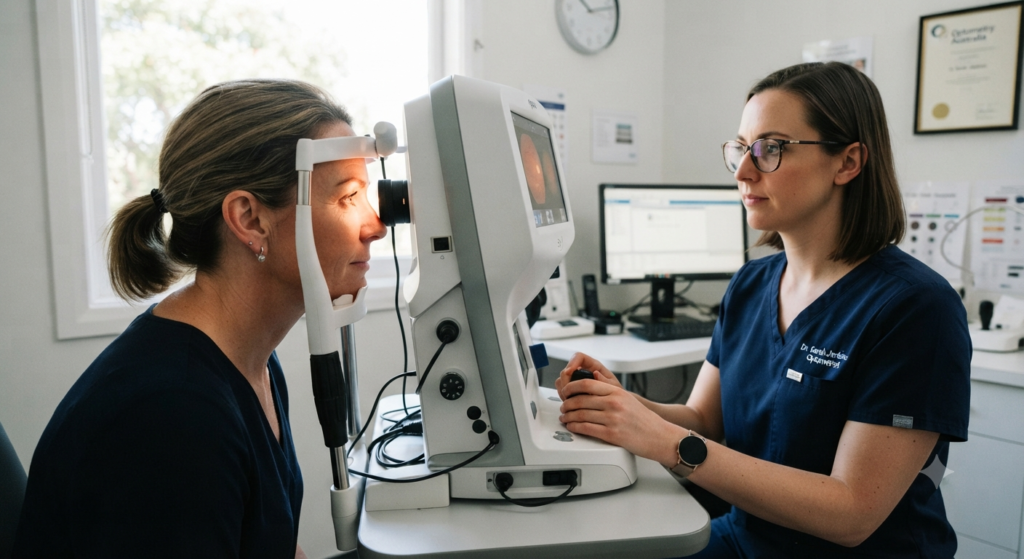
A comprehensive eye examination considers both how clearly you see and the overall condition of your eyes. Depending on your needs, it may involve several different assessments rather than simply identifying whether you require glasses.
When arranging an eye exam in Drummoyne, your consultation may include:
- Discussion of your medical history and vision concerns.
- Assessment of distance and near vision.
- Measurement of your prescription requirements.
- Examination of relevant internal and external eye structures.
- Recommendations for vision correction or further assessment.
Your optometrist may adapt the examination according to your symptoms, age, medical history and previous results.
Allow enough time to discuss concerns such as difficulty reading, discomfort when using screens or changes in your night-time vision. These details help your optometrist understand how your eyesight affects everyday activities.
What to do: Ask what the standard examination covers and whether any additional assessments are anticipated based on your circumstances.
3. Find Out Whether Additional Diagnostic Tests Cost Extra
Not every diagnostic procedure is automatically included in a bulk-billed eye test. Some assessments may have separate billing arrangements, particularly when investigating or monitoring specific eye health concerns.
For example, retinal photography produces images of the back of the eye, while visual field testing evaluates different areas of your field of vision.
These assessments serve different clinical purposes. Therefore, one should not automatically be considered an alternative to another simply because it costs less.
| Assessment | Purpose | Billing considerations |
| Standard eye examination | Assess vision and eye health | Medicare eligibility may apply |
| Retinal photography | Record images of retinal structures | May involve a separate charge |
| Visual field testing | Assess areas of your field of vision | Coverage depends on clinical and billing criteria |
| Follow-up assessment | Investigate or monitor identified concerns | May have separate consultation arrangements |
If your optometrist recommends additional testing, ask why it is necessary and how the results could influence your care.
What to do: Request an explanation of the assessment and its potential cost before proceeding, without unnecessarily delaying important investigations.
4. Understand Children’s Eye Test Costs
Budgeting for a child’s eye care involves more than finding the lowest examination fee. Depending on the results, parents may also need to consider glasses, follow-up assessments or other recommendations.
A children’s eye test in Drummoyne can be adapted to suit your child’s age and ability to participate in different tests.
This is particularly important for younger children who cannot confidently read letters or explain whether something appears blurry.
What Does a Children’s Vision Test Assess?
A children’s vision test may assess visual clarity, prescription requirements, eye alignment, coordination and general eye health. The specific tests depend on the child’s age, development and individual needs.
When choosing a kids’ optometrist, ask how the examination is adapted for children and what happens if further assessment is recommended.
Parents should also explain any concerns noticed at home or school, such as difficulty reading, frequent eye rubbing or avoiding activities that require close visual attention.
What to do: Confirm the examination fee, Medicare eligibility and potential eyewear costs before booking your child’s appointment.

5. Check Whether Contact Lens Fittings Cost Extra
A contact lens consultation can involve additional assessments beyond those performed during a standard eye examination.
Unlike glasses, contact lenses sit directly on the surface of your eyes. Consequently, their suitability depends on more than your prescription alone.
If you are considering contact lenses in Drummoyne, your appointment may involve:
- Assessment of your prescription and eye surface health.
- Selection of an appropriate lens type.
- Evaluation of the lens fit.
- Guidance on insertion, removal and hygiene.
- Follow-up checks where required.
The total expense may depend on whether you are a first-time wearer, changing lens types or renewing an existing contact lens prescription.
What to do: Establish whether the quoted fee includes fitting, trial lenses, instruction and any recommended follow-up appointments. Remember to consider the ongoing cost of purchasing replacement lenses.
6. Separate Eyewear Costs From Examination Fees
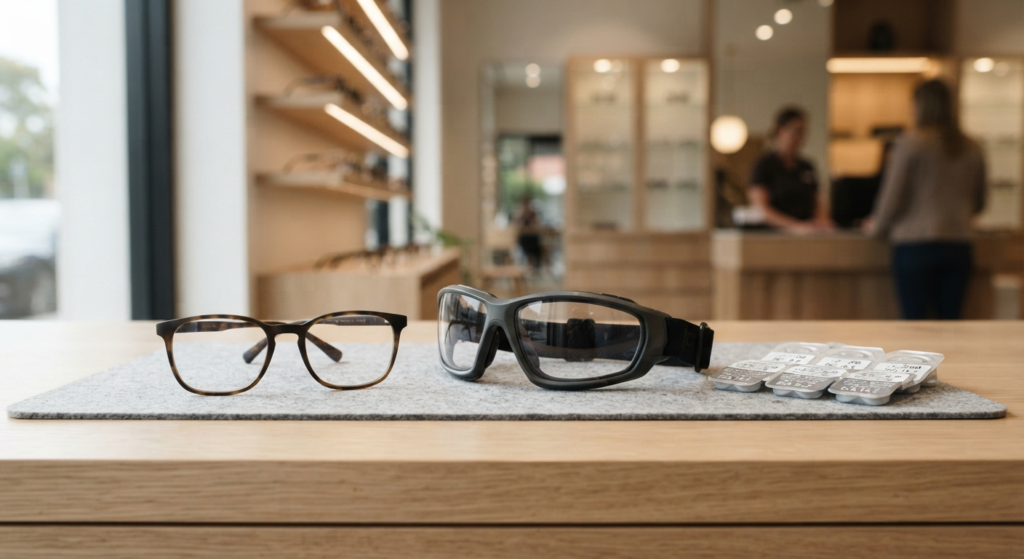
Medicare generally does not cover the cost of prescription glasses or contact lenses. Therefore, even when your eye examination is bulk billed, you may still need to budget for vision correction products.
The final price of prescription eyewear can depend on your prescription, frame selection, lens design and additional features.
For instance, patients requiring progressive lenses may have different expenses from those purchasing straightforward single-vision glasses.
Similarly, prescription sports glasses may require specialised frames or protective features suited to particular activities.
If you have private health insurance, check whether your policy includes optical extras and how much of your annual allowance remains.
A no-gap eyewear package may also have specific eligibility conditions and product limitations.
What to do: Request an itemised eyewear quote showing frames, lenses, selected features and applicable insurance benefits. This helps you compare suitable options without confusing product expenses with consultation fees.
7. Confirm Potential Follow-Up and Referral Costs
Your initial eye test may identify a concern requiring additional investigations, monitoring or referral to an ophthalmologist.
Although this does not mean you necessarily have a serious eye condition, it is important to understand the purpose of any recommended next steps.
Follow-up costs can vary according to the type of assessment, its clinical indication and applicable Medicare arrangements.
Additionally, an ophthalmologist’s consultation generally has its own billing requirements. Your initial optometry fee should not be assumed to cover specialist appointments.
Before leaving your consultation, ask:
- Whether further testing is recommended.
- When your next appointment should occur.
- Whether follow-up assessments have separate fees.
- Whether you require a specialist’s referral.
What to do: Request a clear explanation of your follow-up plan and anticipated expenses. However, seek immediate medical attention for sudden vision loss, severe eye pain or other serious eye symptoms rather than delaying care over cost concerns.
4 Patient Scenarios and Their Potential Eye Care Costs
The following examples show why two patients attending the same optometry practice may have different expenses.
| Patient scenario | Potential expenses |
| Adult attending a routine examination | Consultation fee if not eligible for bulk billing |
| Child requiring prescription glasses | Examination, frames and prescription lenses |
| Adult requiring additional diagnostic testing | Examination and any separately billed assessments |
| First-time contact lens wearer | Examination, fitting, lenses and potential follow-up |
Scenario 1: A Routine Adult Eye Examination
An adult with an eligible bulk-billed consultation who requires no separately charged services or eyewear may have a total out-of-pocket cost of $0.
By contrast, a privately billed examination could involve a consultation gap after Medicare.
Scenario 2: A Child Who Needs Glasses
An eligible child’s examination may be bulk billed. However, the family may still need to pay for prescription eyewear, depending on the selected products and available optical benefits.
Scenario 3: An Adult Requiring Retinal Imaging
A patient may qualify for a bulk-billed examination but require additional imaging. Their final expense depends on whether that assessment is included, eligible for a rebate or privately charged.
Scenario 4: A First-Time Contact Lens Wearer
The patient may need an eye examination, contact lens fitting, instruction and ongoing lens supply. These expenses should be considered together when comparing appointment options.
Actual charges depend on individual requirements and the practice’s current billing policies.
What Should You Bring to Your Eye Test?
Preparing for your appointment can make it easier to discuss your eye health and establish relevant billing arrangements.
Bring the following where applicable:
- Your Medicare and private health fund cards.
- Current prescription glasses and contact lens details.
- Information about previous eye examinations.
- A list of relevant medications and medical conditions.
- Details of any recent changes in your vision.
If you are attending with your child, bring information about any vision concerns raised by teachers or other healthcare professionals.
Frequently Asked Questions
Booking Your Eye Test & Consulting An Optometrist Near Gladesville
Finding the right optometrist near Gladesville involves more than comparing advertised examination prices. It involves evaluating the optometrist’s experience, the range of eye care services available and the thoroughness of their examinations.
You should also consider whether the practice can accommodate your family’s vision needs and provide ongoing support as your eyesight changes. Transparent pricing, convenient appointment availability and clear communication are equally important as well.
So, when choosing an optometrist, look for a practice that offers comprehensive eye examinations, children’s vision care, contact lens fitting and sports vision services. Also, before booking an appointment, contact a reliable optometrist to discuss Medicare eligibility, consultation inclusions and any potential additional fees. This will help you prepare for your visit with greater confidence and fewer unexpected expenses.