
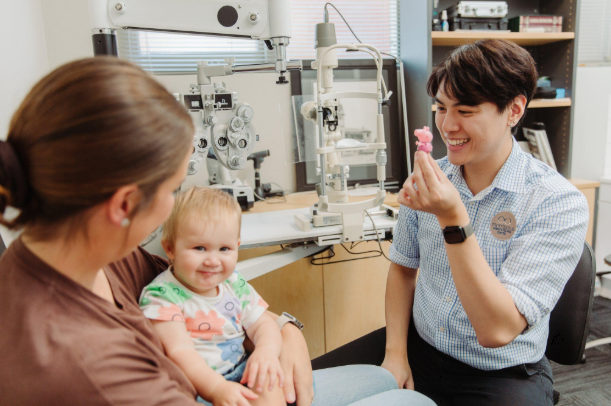
Choosing an optometrist near Five Dock for your child involves more than finding a convenient appointment. You want to understand what the examination covers, whether the optometrist can work with your child’s age and communication style, what the appointment may cost, and what happens if a vision concern is identified.
Children do not always recognise or explain vision difficulties. You might notice squinting, frequent eye rubbing, headaches after reading, or trouble seeing the classroom board. Sometimes, there are no obvious signs at all. If you have concerns about your child’s vision, an eye health professional can help you understand whether further assessment is needed.
Before booking an eye test in Five Dock or a nearby suburb, use the questions below to compare your options and prepare for a useful conversation with the optometrist.
What should you look for in a children’s optometrist near Five Dock?
Look for a registered optometrist who can explain the examination clearly, adapt their approach to your child’s age and needs, and discuss the results and any recommended next steps with you. The right practice should also explain appointment fees, Medicare claiming, and any potential additional costs before you attend.
When comparing providers, consider these practical points:
- Experience with children: Ask how the practice approaches examinations for preschoolers, school-aged children and teenagers.
- Examination scope: Check what is included in the proposed children’s vision assessment rather than assuming every eye test covers the same procedures.
- Communication: Choose a practice that welcomes your questions and explains findings in language you understand.
- Follow-up: Ask how results are discussed and what happens if further assessment, treatment or a referral is recommended.
- Practical arrangements: Confirm appointment availability, location, accessibility and expected fees.
7 questions to ask before booking your child’s eye test
1. Can you assess a child of my child’s age?
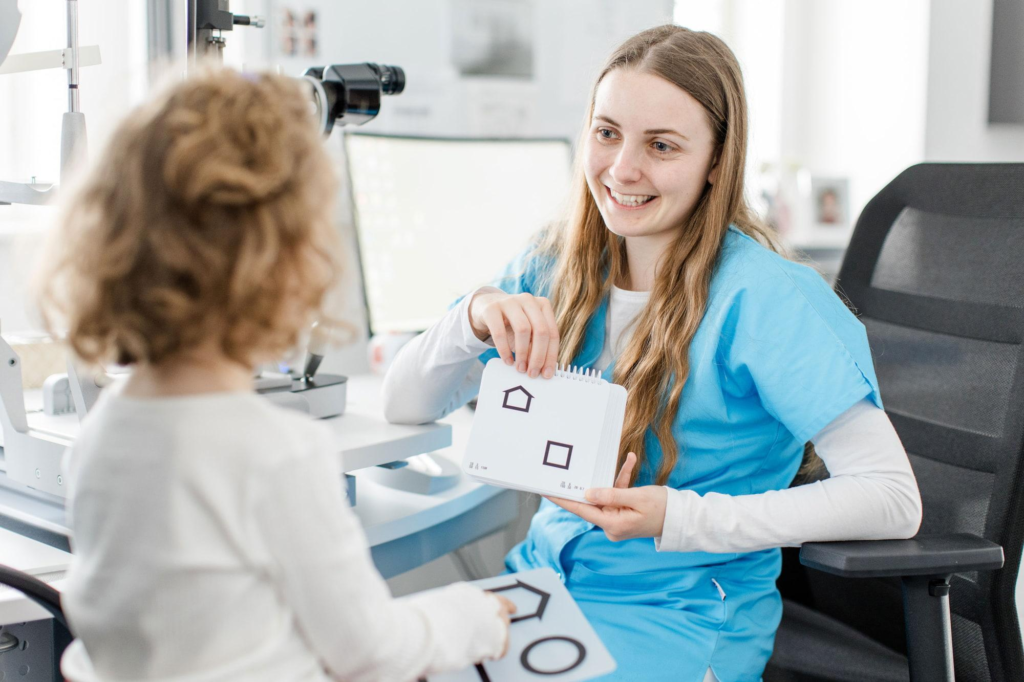
Ask whether the practice routinely examines children in your child’s age group and how the assessment is adapted to their development. A preschooler who cannot yet read letters needs a different testing approach from a teenager who can describe blurred distance vision.
Children may be assessed using age-appropriate pictures, matching activities or objective measurement techniques, depending on the child’s needs and the optometrist’s clinical judgement. Ask what methods may be suitable for your child rather than assuming a standard letter chart will be used.
Ask: “My child is [age]. Can you assess children at this stage, and how do you adapt the examination if they are shy or cannot read a chart?”
2. What does the comprehensive eye examination include?
A comprehensive eye examination can involve several checks, selected according to the child’s age, history, symptoms and clinical needs. These may assess visual clarity, focusing, eye coordination, and eye health. The exact tests vary, so ask the optometrist to explain what is appropriate for your child.
A basic vision screening and a comprehensive eye examination are not interchangeable. Screening can identify a possible concern, but it does not necessarily provide a full assessment of vision and eye health.
Ask: “Which parts of the examination will you perform, and will you explain the findings and any limitations to me afterwards?”
3. What information should I share before the appointment?
Tell the practice what you have noticed and when it occurs. For example, your child might squint at distant objects, complain of headaches during reading, avoid close work or struggle to follow activities at school. These observations do not establish a diagnosis, but they can help the optometrist decide what to investigate.
Also mention relevant family history, previous eye examinations, current glasses, known eye conditions, medications where relevant, and any report from a school, preschool, GP or other health professional.
If your child already wears glasses, bring them along. If you have a previous prescription or screening result, ask whether the practice would like to see it.
Ask: “What details would help you understand my child’s symptoms, and should I bring previous results or reports?”
4. What if my child is nervous, restless, or too young to answer questions?
Children respond differently to unfamiliar settings. Some are happy to participate, while others need more time, reassurance or breaks. Ask how the optometrist approaches children who are anxious, easily distracted, or not yet able to describe what they see.
It is reasonable to ask whether a parent or carer can stay with the child during the appointment, how long to allow, and whether there is anything you can do beforehand to help the child feel comfortable.
Do not assume that a child must read letters or give verbal answers for an assessment to be useful. The optometrist can explain which age-appropriate methods may be suitable and whether any parts of the examination need to be repeated or arranged for another visit.
Ask: “How do you make the appointment manageable for children who are nervous or find it hard to sit still?”
5. What will the appointment cost, and can Medicare help?
Before booking, ask about the consultation fee, Medicare eligibility, any bulk-billing arrangements, and whether additional tests could attract separate charges. Medicare coverage depends on the applicable service and eligibility requirements; do not assume that every appointment or additional procedure will be fully covered.
If you have private health insurance, ask your insurer whether the relevant optical benefits apply to glasses or contact lenses. These products are separate from the cost of an eye examination, and cover varies by policy.
For general guidance, see Services Australia’s information about Medicare services for children and Healthdirect’s guide to eye tests. Confirm the details for your own appointment directly with the practice.
Ask: “What is the expected out-of-pocket cost, what can be claimed through Medicare, and will you explain any additional fees before proceeding?”
6. What happens if the examination identifies a vision concern?
Ask how the optometrist will explain the findings, whether your child may need glasses or monitoring, and when a follow-up appointment might be appropriate. Some concerns may be managed by an optometrist; others may require further investigation or referral to another health professional.
A useful appointment should leave you understanding the findings, the recommended next step, and when to seek further advice. If the results are unclear to you, ask for an explanation in plain language.
Ask: “If you identify a concern, will you explain the options, the recommended timeframe and whether another practitioner needs to be involved?”
7. Can you advise on glasses, sport or contact lenses if my child needs them?
If your child already wears glasses or participates in sport, ask about suitable prescription eyewear and how to choose a comfortable, secure fit. Prescription sports glasses may be relevant for some activities, but the appropriate option depends on the sport, the risks involved, and your child’s prescription.
For an older child or teenager interested in contact lenses, ask whether a contact lens fitting is appropriate, what training and aftercare are required, and how hygiene and safe wear will be explained. Contact lenses are not automatically suitable for every child; readiness and clinical suitability should be discussed with the optometrist.
Ask: “If my child needs vision correction for school or sport, what options are appropriate, and what follow-up or care instructions would we need?”
What should you bring to your child’s eye appointment?
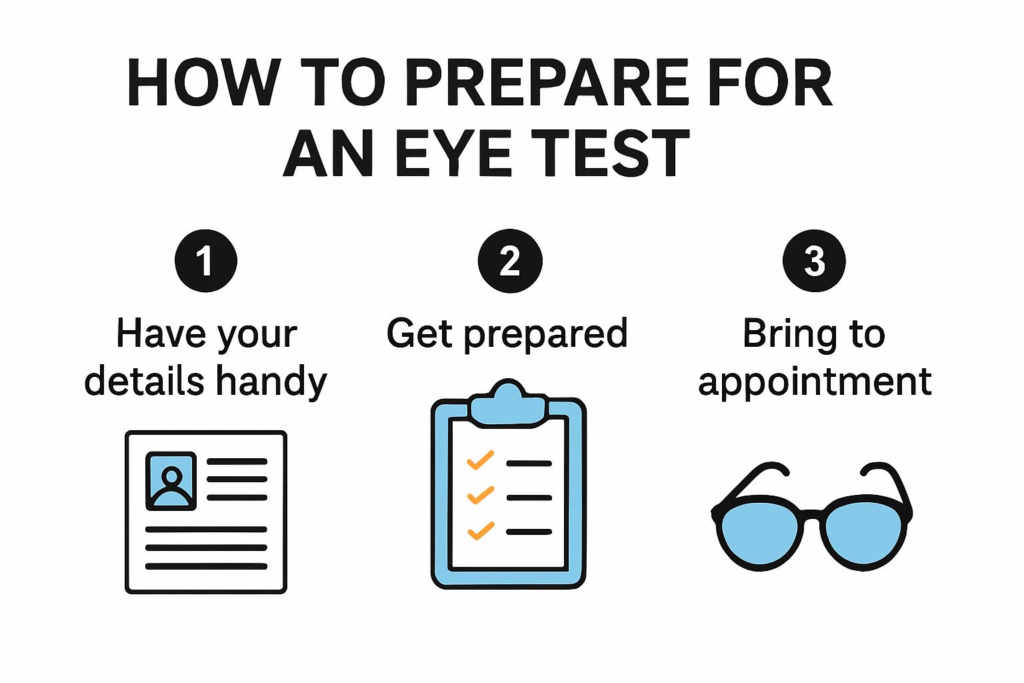
A little preparation can help you make better use of the appointment. Before leaving home, check the practice’s instructions and bring the information that is relevant to your child’s situation.
- Medicare card: Bring it so the practice can check the relevant claiming arrangements.
- Current glasses: Take your child’s glasses if they already use them.
- Previous results: Bring earlier prescriptions, screening results, or reports if available.
- Your observations: Write down symptoms, when they occur, and how long you have noticed them.
- Relevant history: Note any family history of eye conditions and relevant medical information.
- Your questions: Keep a short list so you remember to discuss cost, testing, results, and follow-up.
If your child’s teacher or preschool has raised a concern, ask whether a written note or screening result is available. Share it with the optometrist if relevant, while remembering that classroom observations are not a diagnosis.
Is a preschool or school vision screening enough?
A screening is useful, but it should not be treated as a guarantee that every aspect of a child’s vision and eye health is normal. A screening is designed to identify possible concerns; a comprehensive eye examination can investigate a child’s vision and eye health in greater detail.
NSW Health’s StEPS program offers free vision screening for four-year-olds through participating preschools and long day care centres. NSW Health explains that children may not recognise a problem themselves and that follow-up can be important when screening suggests a possible issue.
If your child receives a referral or a screening result recommends further assessment, follow the advice provided. If you remain concerned despite a screening result that appears normal, discuss your observations with an optometrist or your child’s GP.
Choosing an optometrist near Five Dock: a final checklist
Before confirming an appointment, use this checklist to compare practices. You do not need a provider to offer every possible service; you need one that can assess your child’s needs or explain the appropriate next step.
- Can the practice assess a child of this age?
- Can the optometrist explain what the examination includes?
- Can I share my observations and ask questions during the appointment?
- Have I confirmed the fees, Medicare eligibility, and possible additional charges?
- Will I understand the results and any recommended follow-up?
- Is the location and appointment time practical for our family?
- If further care is needed, can the practice explain the referral or follow-up pathway?
The best choice is one that fits your child’s needs, communicates clearly and gives you confidence about what happens next. If you are comparing a children’s optometrist near Five Dock, use the questions above to guide the conversation rather than relying on location or advertising claims alone.
Frequently asked questions
Arrange a children’s eye appointment near Five Dock
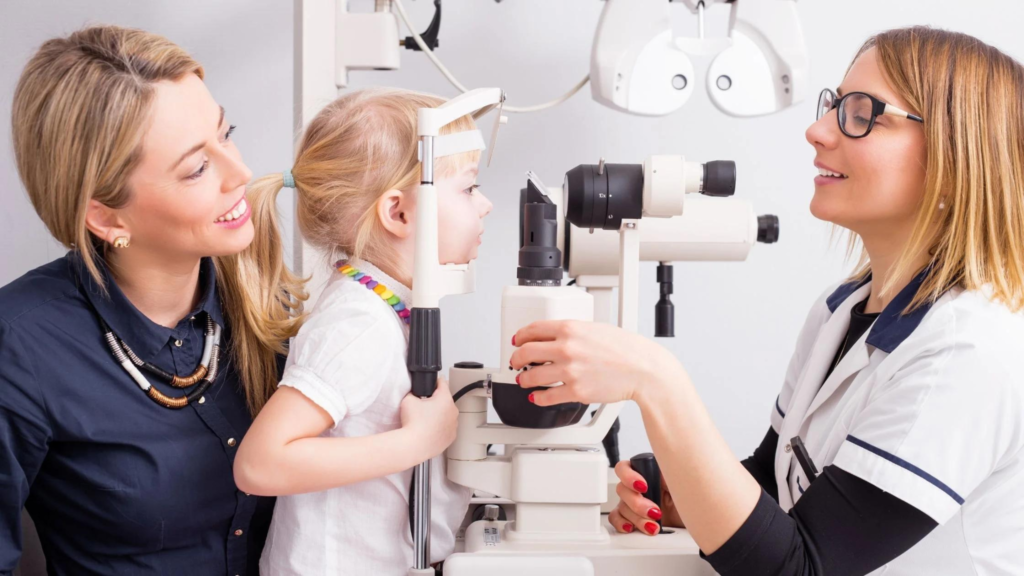
Knowing what to ask can make it easier to choose an optometrist and prepare your child for an eye examination. Focus on the assessment, your child’s comfort, the cost, and how results and next steps will be explained.
Drummoyne Optometry promotes children’s optometry services for families in Five Dock and surrounding Inner West suburbs. So, you may review its local Five Dock service information before deciding whether the practice suits your family. Also, explore Drummoyne Optometry’s services for Five Dock families, or book an appointment directly to ask whether its children’s eye care service is suitable for your child.